
Golf Ball Logo Printing: Methods, Artwork Rules and Limits
Golf ball logo printing is usually done by pad printing, which transfers ink from an etched plate to the curved, dimpled surface through a soft silicone pad. Full-color UV printing handles gradients and photos. Either way, the best results come from bold vector artwork, limited colors and a logo sized to the small printable zone.
Key Takeaways
- Pad printing is the standard method for spot-color logos on golf balls: sharp, durable and economical at volume.
- Full-color UV printing suits gradients and photographic logos but needs careful artwork preparation.
- The dimpled, curved surface limits fine detail, so thin lines and tiny text are the most common artwork problems.
- Supply vector files with Pantone references and expect a mockup to confirm size, position and colors.
- Each extra color or print position usually adds a setup or print pass, which affects cost and lead time.
Why Printing on a Golf Ball Is Different
A golf ball is one of the hardest promotional surfaces to print well. It is small, fully curved in every direction, and covered with hundreds of dimples. Ink has to bridge the dimple edges without pooling inside them, and it has to survive club impact, wet grass and the inside of a bag.
Those conditions shape almost every rule in this guide. Methods that work on flat items, like large-format screen printing, do not apply directly. Artwork that looks perfect on a business card can lose detail on a ball. Understanding the limits up front is the fastest way to a mockup you can approve the first time.
It also helps to know that the logo does not affect playability when it is applied correctly. The print sits on the cover as a thin ink layer, and ball manufacturers have long printed brand names and numbers this way.
Golf Ball Logo Printing Methods Compared
Two methods cover nearly all custom logo ball orders. The table compares them, along with the label options buyers sometimes ask about.
| Method | How it works | Best for | Limits |
|---|---|---|---|
| Pad printing | Ink is picked up from an etched plate by a silicone pad and pressed onto the ball | One to a few spot colors, solid logos, wordmarks | Each color is a separate pass and plate; gradients not suitable |
| Full-color UV printing | Digital inkjet prints CMYK ink cured instantly by UV light | Gradients, photos, multi-color crests | Fine detail can soften on dimples; color can differ from spot inks |
| Pad print plus clear coat | Logo is printed, then sealed under a clear layer | Programs needing extra abrasion resistance | Adds a step and is usually built into the ball process |
| Adhesive labels or stickers | Pre-printed label applied by hand | Not recommended for play | Peel off on impact; affect the ball surface |
Pad printing: the workhorse
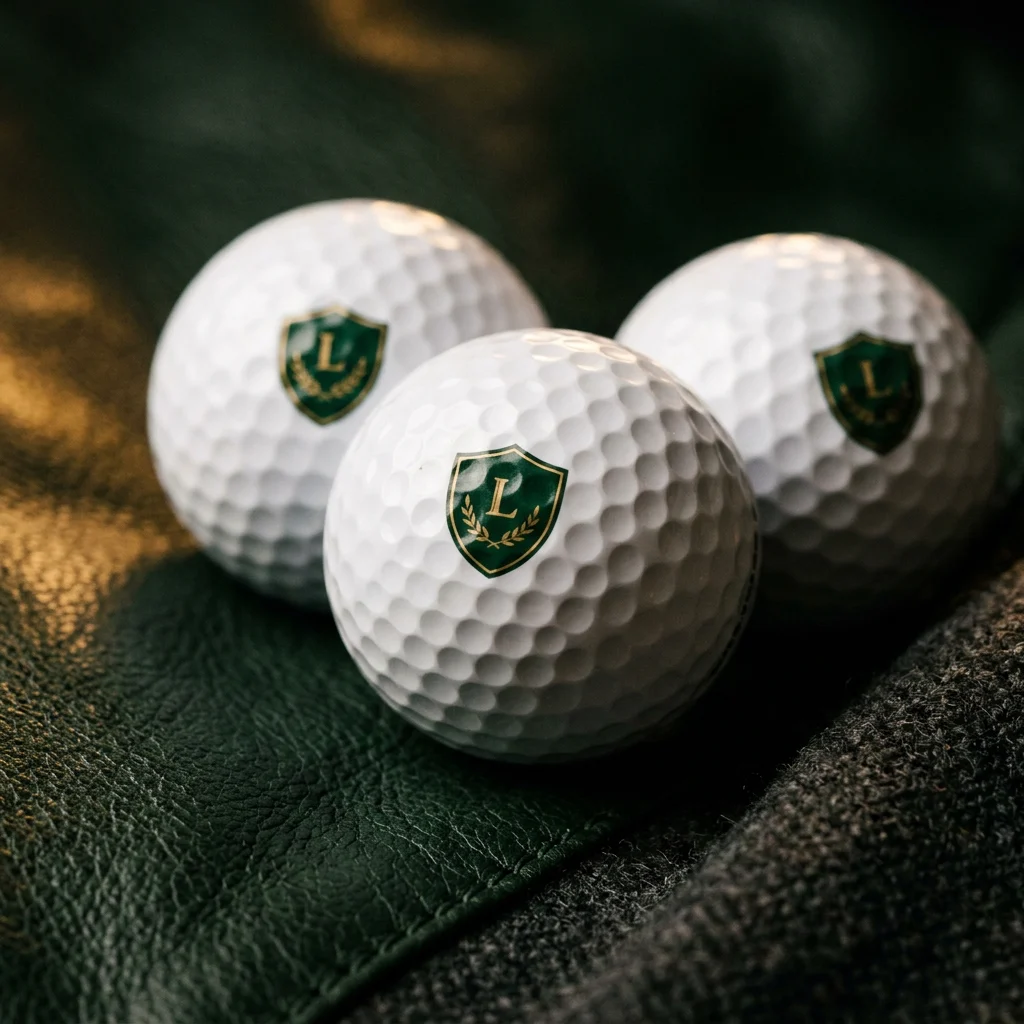
Pad printing is the default for most logo balls because it handles curved surfaces naturally. The soft silicone pad wraps around the ball, so ink reaches the surface evenly across the dimples. The method excels at solid shapes and spot colors matched to a Pantone reference. A one-color logo is the most economical setup, and two or three colors are common for club crests and corporate marks. Each extra color needs its own plate and a careful registration step.
Full-color UV printing: for complex logos
When a logo depends on gradients, shading or a photo, a digital UV process prints it in CMYK and cures it with ultraviolet light. This is useful for event artwork, mascots and full-color crests. Because the image is built from tiny dots of process color, an exact spot-color match is harder than with pad printing, and very fine detail may soften across dimples. We usually recommend UV printing only when the design truly needs it.
Artwork Rules That Prevent Reprints
Most delays on logo ball orders come from artwork, not from production. Follow these rules and your file will usually go straight to mockup approval:
- Send vector files. AI, EPS, PDF or SVG with outlined fonts. Low-resolution JPG or PNG files usually need to be redrawn, which adds time.
- Simplify the logo. Remove thin outlines, small taglines and tiny registered marks that will not survive at ball size.
- Avoid hairlines. Very thin strokes can break up across dimples. Thicken lines and open up tight gaps between letters.
- Limit colors. One or two spot colors give the sharpest pad-printed result. Use full color only when necessary.
- Specify colors precisely. Give a Pantone reference for each ink. Screen colors vary by monitor and cannot be matched reliably.
- Check contrast. Dark inks on a white ball read best. Light inks on a white ball can almost disappear.
- Consider orientation. Horizontal logos usually fit the printable zone better than tall, stacked versions.
Not sure your logo will print well on a ball?
Send us your file and we will check it, suggest any simplifications and return a free digital mockup in 1 to 2 business days.
Print Area, Positions and Practical Limits
The printable zone on a ball is small and sits away from the seam line where the two cover halves meet. A logo that is too large will distort as it wraps around the curve, so we size each logo to stay legible without stretching. We confirm the exact size in your mockup rather than guessing from a flat file.
Common position options include:
- Single side logo: the most common and most economical setup.
- Two-side print: a logo on one side and a name, date or slogan on the other, popular for events.
- Logo plus personalization: individual names or numbers for VIP gifts, quoted separately.
Each extra position is a separate print step, so it affects both cost and lead time. If you are planning a bulk order, our guide to personalized golf balls in bulk explains MOQ, packaging and the other pricing factors that combine with print choices.
Quality Checks Before and During Production
Good printing is confirmed, not assumed. On logo ball orders we check:
- Color match against your Pantone references on the actual ball, not only on screen.
- Registration on multi-color logos, so colors line up without gaps or overlap.
- Coverage and sharpness across the dimples, with no missing ink or smudging.
- Position consistency from ball to ball.
- Durability of the print with a rub test before packing.
Inspection sampling commonly follows AQL methods based on ISO 2859-1, which defines sampling plans for inspection by attributes. You can see how we apply this on our quality control page. If you want to see the print in hand first, physical samples typically take 5 to 10 working days, and mass production usually follows in 12 to 30 days.
How Golf Ball Printing Compares With Other Decoration Methods
If you are building a full branded program, the logo will appear on several materials, and each uses a different decoration method. A cap or towel is usually embroidered or patched, and leather items like scorecard holders are often debossed. The artwork principles overlap: bold, simple shapes reproduce best everywhere. For textiles, see embroidery vs patch; for leather, see debossed vs embossed logos. Preparing one simplified version of your logo for small items saves time across the whole order. When you request a quote, attach the full logo and any small-format version you already use, and tell us which items share the same artwork so we can check it once for every method. You can browse our custom logo golf balls to see available ball options.
FAQ
What is the most common method for golf ball logo printing?
Pad printing is the most common method. A silicone pad transfers ink from an etched plate onto the curved, dimpled surface, giving sharp and durable spot-color logos at an economical cost.
Can you print a full-color logo on a golf ball?
Yes. Full-color UV printing can reproduce gradients and photographic designs. Fine detail may soften across the dimples and exact spot-color matching is harder, so we recommend it only when the design needs it.
What file format should I send for golf ball printing?
Send a vector file such as AI, EPS, PDF or SVG with outlined fonts, plus a Pantone reference for each color. Low-resolution images usually need to be redrawn before printing.
Does a printed logo affect how the golf ball plays?
No. A properly applied logo is a thin ink layer on the cover, the same way manufacturers print brand names and numbers on standard balls.
Conclusion
Golf ball logo printing rewards simple, well-prepared artwork. Pad printing covers most logos with crisp spot colors, while UV printing handles complex full-color designs. Send vector files with Pantone references, keep the design bold and sized for a small curved zone, and approve a mockup before production. Request a quote and we will check your artwork for free.


