
PU Leather vs Genuine Leather for Golf Accessories
In the PU leather vs genuine leather decision for golf accessories, PU usually wins for headcovers, pouches and putter covers because it is consistent, water-resistant, easy to color-match and cheaper at low MOQs. Genuine leather earns its place where feel, breathability and patina matter most, such as gloves, scorecard holders and premium yardage book covers.
Key Takeaways
- PU (polyurethane) leather is a coated synthetic; genuine leather is processed animal hide. They behave differently in rain, sun and storage.
- PU gives uniform color, grain and thickness across a whole order, which makes Pantone matching and repeat runs far easier.
- Genuine leather costs more, varies hide to hide, and needs more conditioning, but it ages with character and breathes in the hand.
- Logo methods differ: debossing and heat embossing look sharp on both, while printing and some foils sit better on PU.
- Match the material to the product’s job and the buyer’s price point, not to the word “leather” on the spec sheet.
What PU Leather and Genuine Leather Actually Are
How each material is built explains almost every difference you will see in a finished headcover or pouch.
PU leather
PU leather is a fabric backing, usually a polyester or cotton-blend knit or microfiber base, coated with one or more layers of polyurethane. The top layer is embossed with a grain pattern, from a smooth nappa look to a pebbled or carbon texture, and then finished with a color coat. Because the factory controls every layer, the result is the same thickness, the same grain and the same shade from the first roll to the last.
Genuine leather
Genuine leather is tanned animal hide, most often cowhide for cases and covers, and sheepskin (cabretta) for golf gloves. Hides are split into layers: full-grain keeps the original surface with all its natural marks, top-grain is lightly sanded and refinished, and lower splits are often coated to look uniform. On a spec sheet, the phrase “genuine leather” alone tells you very little, so always ask which grain and which tannage you are buying. If responsible sourcing matters to your customers, ask whether the tannery is audited under the Leather Working Group program, which assesses tanneries on environmental performance.
Side-by-Side Comparison for Golf Accessories
The table below compares the two materials on the factors that matter for golf products that live in a bag, a cart and a trunk. These are relative comparisons from production experience, not lab ratings.
| Factor | PU leather | Genuine leather |
|---|---|---|
| Unit cost | Lower, and stable across order sizes | Higher, and varies with hide grade and yield |
| Color consistency | Very high; easy to match a Pantone reference | Varies hide to hide; dye lots can shift slightly |
| Water resistance | Good out of the box; wipes clean | Needs treatment; can water-spot if left wet |
| Feel and breathability | Smooth and uniform; does not breathe | Warmer, softer feel; breathes and molds to use |
| Aging | Holds its look, but cheap grades can crack or peel over years | Develops patina; scuffs can be conditioned out |
| Logo options | Deboss, heat emboss, print, foil, embroidery, patches | Deboss, emboss, foil, laser; printing is less durable |
| Animal-free | Yes | No |
For a deeper look at how leather compares with knitted covers on feel and brand image, see our guide to leather vs knit headcovers.
Where Each Material Works Best on the Golf Course
A headcover gets pulled on and off every hole and left in a wet bag. A glove has to grip, stretch and breathe. Those are very different jobs.
Products where PU is the sensible default
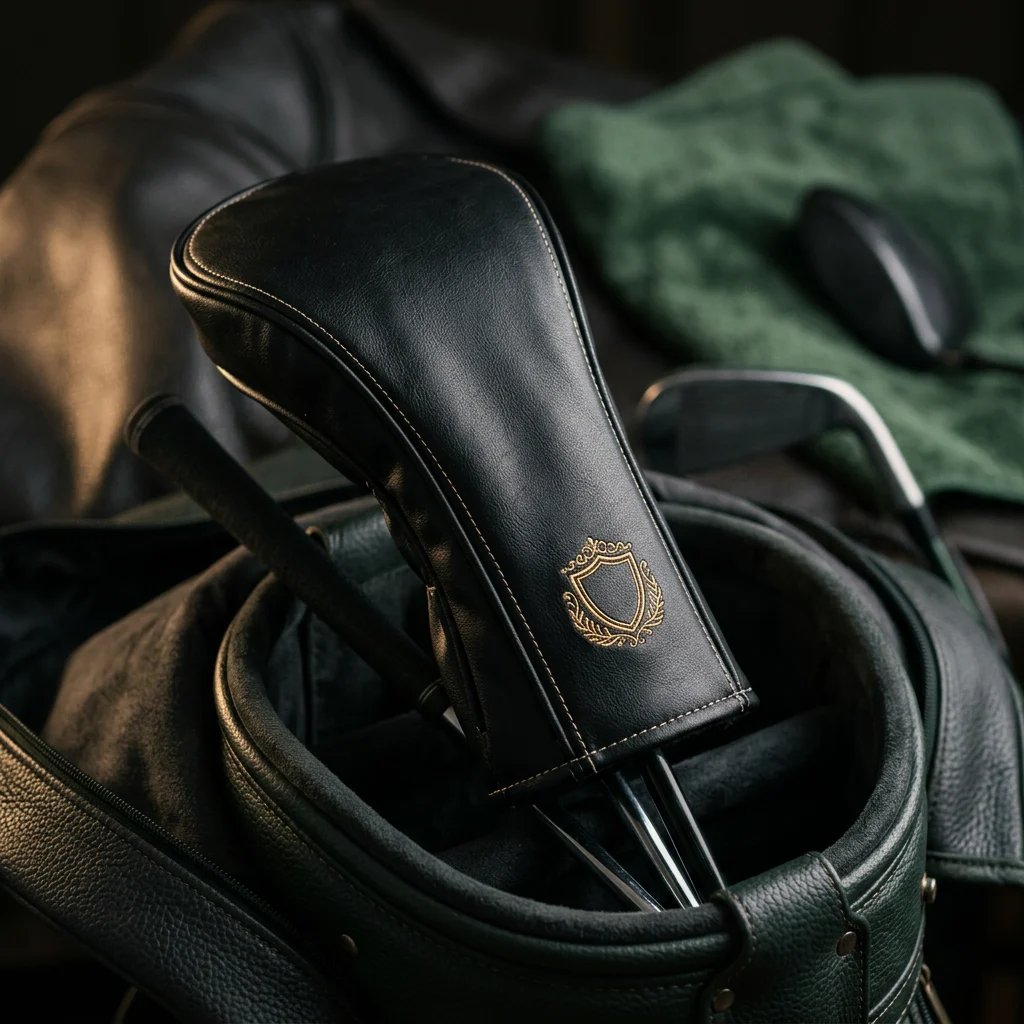
- Driver, fairway and hybrid headcovers. Our custom PU leather driver headcover starts at 50 pieces. PU holds bright club colors, survives rain and keeps its shape with a foam or padded lining.
- Blade and mallet putter covers. Magnetic closures and stitched panels benefit from PU’s uniform thickness, which keeps seams tidy and magnets aligned.
- Valuables pouches. A custom golf valuables pouch is handled constantly and tossed into bag pockets; PU wipes clean and does not stain from sunscreen or sweat as easily.
Products where genuine leather earns the premium
- Golf gloves. Cabretta sheepskin is the standard for tour-style gloves because it is thin, supple and grips well.
- Scorecard holders and yardage book covers. These are carried in the hand and the back pocket for years. Full-grain or top-grain leather softens and darkens in a way that many members value.
- Executive and VIP gifts. When the item is meant to signal a premium relationship, the smell and patina of real leather do part of the selling.
Cost, MOQ and Lead Time Differences
Prices move with material grade, size, decoration and freight, but the relative picture is useful when you plan a budget.
- Material cost. Genuine leather nearly always costs more per square foot than PU. Full-grain costs more than top-grain, and both cost more than coated splits.
- Yield and waste. PU comes on uniform rolls, so cutting is efficient. Hides have irregular shapes and natural marks that must be cut around, which raises the effective material cost per unit.
- MOQ. Our PU headcovers and putter covers start at 50 pieces, and valuables pouches, scorecard holders and yardage book covers at 100. Genuine leather versions may need a higher quantity for custom colors because tanneries dye in batches.
- Lead time. Samples typically take 5 to 10 working days and mass production 12 to 30 days depending on product. Genuine leather in a special color can add time for dyeing, so confirm the material plan before you lock a delivery date.
Our MOQ and shipping page explains how quantities, sampling and delivery fit together on a typical order.
Logo Decoration on PU vs Genuine Leather
Both materials take a logo well, but they react differently to heat, pressure and ink.
- Debossing. Pressing the logo into the surface works on both. Genuine leather takes a deep, soft-edged impression; PU gives a crisp, uniform one. Our article on debossed vs embossed logos covers depth and line-weight limits.
- Heat embossing and foil. Gold, silver or colored foil stamped with a heated die looks sharp on smooth PU. On leather, foil adheres well to smooth top-grain but less evenly to heavily textured hides.
- Printing. Screen or UV printing allows full color on PU. On genuine leather, prints tend to wear faster at flex points, so we usually suggest deboss or laser instead.
- Embroidery and patches. Common on PU headcovers. On thick leather, embroidery is possible but the needle holes are permanent, so the design must be final before sampling.
- Laser engraving. Burns a tonal mark into genuine leather with a natural, darker contrast. On PU the result depends on the coating and is less predictable, so test it on a sample.
Not sure which leather fits your program?
Send us your logo, target quantity and product list. We will recommend PU or genuine leather for each item and return a free digital mockup in 1 to 2 business days.
Durability, Care and Compliance Questions to Ask
Most complaints about “leather” golf accessories trace back to a material grade that was never specified. Before you approve a sample, ask the factory these questions in writing.
- For PU: What is the backing (knit or microfiber)? How thick is the finished material? Has it been tested for flex cracking and color rub? Low-grade PU can peel at fold lines after a few seasons in a hot car trunk.
- For genuine leather: Which grain (full, top or split)? Which tannage (chrome or vegetable)? Is the surface finish pigmented or aniline? Aniline leather looks richer but marks easily.
- For both: Do linings, foams and threads meet your market’s chemical rules? If you sell in California, review the Proposition 65 warning requirements, since some coatings, dyes and plasticizers can be on the list.
Care instructions also differ. PU needs only a damp cloth and should be kept out of prolonged direct heat. Genuine leather benefits from occasional conditioning and should be allowed to dry naturally if it gets wet, never next to a heater. Our quality control process checks stitching, edge finishing and logo placement before shipment.
When you send artwork, include a Pantone reference for each color. PU can usually be matched closely; genuine leather will be matched as near as the dye lot allows, and a physical swatch approval is worth the extra few days.
How to Choose for Your Brand or Event
Start with the buyer and the product’s job, then pick the material. A simple framework we use with clients:
- Tournament gifts and outing giveaways: PU. It keeps per-unit cost predictable, looks uniform across the field and arrives fast.
- Pro shop retail headcovers and pouches: PU in most cases, with a premium microfiber grade for higher shelf prices.
- Member or VIP gifts: Genuine leather scorecard holders or yardage book covers, often paired with a PU pouch to balance the budget. Our golf valuables pouch guide shows how pouch sizes and closures fit different gift sets.
- Private label lines: Offer both, so customers can choose a standard PU version and a genuine leather upgrade under the same logo.
- Vegan or animal-free positioning: PU, and say so clearly on the hang tag.
If you want a material recommendation for a full product list, request a quote and include your target retail price or gift budget. That single number usually decides the material faster than any spec debate.
FAQ
Is PU leather good enough for golf headcovers?
Yes. A good microfiber-backed PU is the most common material for custom headcovers because it resists water, holds bright colors, keeps a uniform shape and costs less than genuine leather. Ask for the backing type and finished thickness so you avoid low grades that can crack over time.
Why are golf gloves made from genuine leather instead of PU?
Gloves need to be thin, stretch with the hand, breathe and grip the club. Cabretta sheepskin does all of that well, which is why it remains the standard for tour-style gloves. Synthetic gloves are more durable in some conditions but usually offer less feel.
Can you match my brand color on genuine leather?
We can get close, but genuine leather is dyed in batches and every hide absorbs color a little differently. PU can be matched to a Pantone reference more precisely. For leather, we recommend approving a physical swatch before mass production.
Which logo method lasts longest on leather golf accessories?
Debossing lasts longest on both PU and genuine leather because nothing is applied to the surface that can wear off. Laser engraving is similarly durable on genuine leather. Foil and printing look sharp but can wear at flex points over time.
Conclusion
PU leather is the practical choice for most custom golf accessories: it is consistent, weather-tolerant, easy to brand and budget-friendly at low MOQs. Genuine leather is worth the premium for gloves and for hand-carried gifts where feel and patina are part of the value. Specify the grade, test the logo method on a sample, and choose by the product’s job rather than the label.


