
Golf Glove Sizing Chart: How to Size a Custom Glove Order
A golf glove sizing chart matches two hand measurements, palm circumference and hand length, to a size label from Small to XXL, plus Cadet sizes for shorter fingers. For a custom glove order, measure a sample of your players, use the factory’s pattern chart, and weight the size run toward the middle sizes.
Key Takeaways
- Glove size comes from palm circumference and hand length; Cadet sizes fit wider palms with shorter fingers.
- Sizing differs between glove patterns, so always use the factory’s own chart and approve a fit sample.
- Most golfers wear one glove on their lead hand: right-handed players buy left-hand gloves, and left-handed players buy right-hand gloves.
- A custom order needs a planned size run, not equal quantities of every size.
- Our cabretta leather golf glove starts at 100 pieces, with samples in about 5 to 10 working days.
How Golf Glove Sizing Works
Golf gloves fit tighter than winter gloves. A correct fit feels snug across the palm with no loose material when you grip a club, and the fingertips reach the end of each finger without pressing hard against it. Too loose and the leather bunches in the palm, which affects grip. Too tight and the seams strain, the leather tears early and the player’s hand fatigues.
Two measurements decide the size:
- Palm circumference measured around the widest part of the hand, just below the knuckles, excluding the thumb.
- Hand length measured from the crease at the base of the palm to the tip of the middle finger.
Circumference usually decides the base size. Length decides whether a player needs a regular or a Cadet glove. Cadet sizes have a similar palm width but shorter fingers, which suits players whose standard glove leaves empty material at the fingertips.
Golf Glove Size Chart by Label
The table shows how standard labels relate to each other and where each one usually sits in a custom order. We do not print universal inch values here on purpose: different glove patterns are cut differently, and quoting one brand’s measurements against another pattern causes more returns than it prevents. With every glove quote we send the measurement chart for the exact pattern you are ordering.
| Size label | Typical wearer | Place in a size run | Notes |
|---|---|---|---|
| Small (S) | Smaller men’s hands, larger women’s hands | Edge size | Order lightly unless the group skews younger or includes many women in men’s gloves |
| Medium (M) | Average men’s hand | Core size | One of the biggest buckets in most men’s orders |
| Medium-Large (ML) | Between M and L | Core size | Popular with players who find M tight and L loose |
| Large (L) | Larger men’s hand | Core size | Another large bucket in men’s orders |
| Extra Large (XL) | Big hands, wide palms | Edge size | Plan a smaller share; useful for corporate outings with a broad mix of players |
| XXL | Very large hands | Specialty | Only when your roster confirms demand |
| Cadet (C-M, C-ML, C-L) | Wider palm, shorter fingers | Specialty | Worth adding for pro shop retail, where customers try on before buying |
| Women’s S to L | Women’s patterns, narrower cut | Separate run | Use a women’s pattern rather than small men’s sizes for ladies’ events |
How to Measure a Hand for Glove Size
If you are ordering gloves for a team, an academy or a member program, collect measurements from a sample of real players before you finalize the size run. It takes a few minutes per person.
- Use a soft tape measure. A sewing tape works; a strip of paper and a ruler works in a pinch.
- Measure the lead hand. That is the left hand for a right-handed golfer and the right hand for a left-handed golfer.
- Wrap the palm. Keep the hand flat with fingers together and wrap the tape around the knuckle line, excluding the thumb. Do not pull it tight.
- Measure length. From the crease where the palm meets the wrist to the tip of the middle finger.
- Compare to the pattern chart. Use the chart for the exact glove pattern. If a player sits between sizes, cabretta usually stretches slightly with wear, so many players choose the snugger size.
- Record handedness. You need this for every player, not just the size.
When measuring is not practical, such as for a large corporate outing, ask attendees to choose a size on the registration form and give them a short how-to-measure note. Self-reported sizes are less reliable than measured ones, so keep a small buffer of the core sizes.
Planning the Size Run for a Custom Glove Order
The biggest mistake on custom glove orders is buying the same quantity in every size. That leaves you short of Medium and Large and holding Small and XXL stock for a long time. A better approach:
- Start from your own data. Past glove sales in your pro shop, a roster with recorded sizes, or measurements from a sample of players beat any general rule.
- Weight toward the core. For men’s orders, M, ML and L usually carry most of the volume. S and XL are smaller shares, and XXL is optional.
- Split handedness. Most units will be left-hand gloves for right-handed players. Add a smaller right-hand allocation for left-handed golfers, and confirm it with your roster when you can.
- Run women’s and Cadet gloves separately. Use separate patterns rather than squeezing these players into men’s sizes.
- Keep a buffer for retail. A pro shop sells gloves as a repeat consumable, so reorders are normal. Plan the first order to cover a season and reorder the sizes that sell fastest. Our article on pro shop merchandise ideas covers how gloves fit into a wider retail mix.
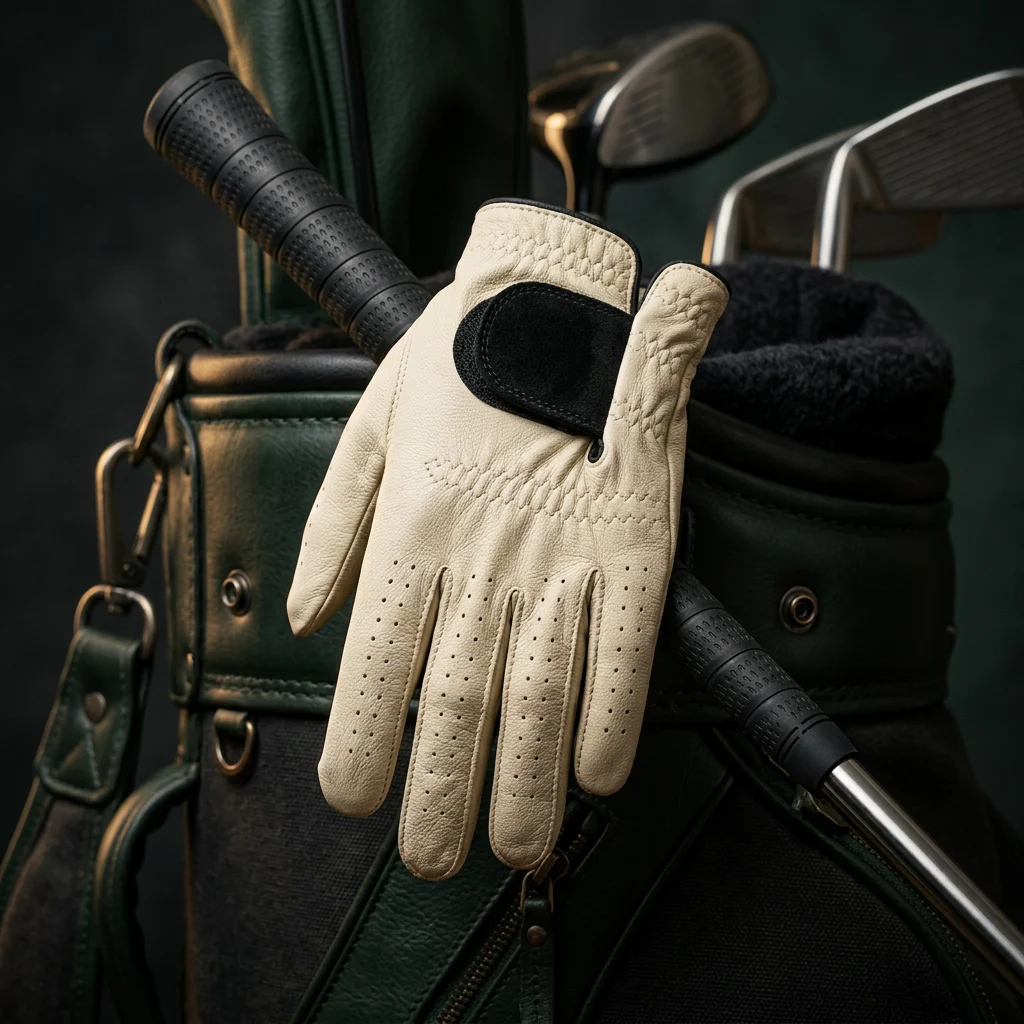
Our custom cabretta leather golf glove has an MOQ of 100 pieces per order, and we can split that quantity across sizes and handedness. Ask us when you request a quote and we will suggest a starting size run based on your audience.
Get a glove fit sample with your logo
Tell us your quantity, logo and audience. We will send a free digital mockup in 1 to 2 business days, the pattern measurement chart and a suggested size run.
Glove Materials, Fit and Logo Placement
Material affects fit as much as size does. Cabretta sheepskin is thin and supple, so it molds to the hand and gives the closest feel. Synthetic and hybrid gloves use synthetic panels in high-flex areas for durability and often fit a little firmer. If you are comparing a leather glove to a synthetic one, do not assume the same label fits the same way.
Where the logo goes
- Closure tab. The most visible spot when the glove is worn. Small logos print or emboss well here.
- Back of hand. Larger area for a brand mark or club crest, usually printed.
- Removable ball marker. Some tab designs hold a ball marker that can carry a second logo.
- Inner cuff label. For private label lines, a woven or printed size-and-brand label finishes the product.
Keep logos away from the palm and finger creases, where decoration cracks quickly. If you are deciding between stitched and applied branding for the rest of your range, our guide to embroidery vs patch logos explains which method holds up on which material.
Sampling, Quality Control and Packaging
A fit sample is more important for gloves than for almost any other golf accessory. Order samples in at least two adjacent sizes, such as M and ML, and have real players try them with a club in hand. Check:
- Snug palm with no wrinkles when gripping
- Fingertips reach the ends without pressure
- The closure tab fastens securely with room to adjust
- Logo position and color match the approved mockup
- Stitching is even along the fingers and thumb
Samples typically take 5 to 10 working days and mass production 12 to 30 days depending on the product. Before shipment, inspections can follow an AQL sampling plan based on ISO 2859-1, which sets how many units to check for a given lot size. See our quality control page for the checks we run.
For retail, individual packaging with the size printed clearly on the front saves pro shop staff time. If you are building your own glove line, our guide on starting a private label golf accessories brand covers labels, packaging and reorder planning. For leather goods sold in California, review the Proposition 65 requirements with your compliance team, since some dyes and tanning chemicals can trigger warnings. If responsible leather sourcing matters to your customers, ask about tanneries assessed by the Leather Working Group.
FAQ
How do I know my golf glove size?
Measure palm circumference around the knuckles, excluding the thumb, and hand length from the wrist crease to the tip of the middle finger. Compare both numbers to the size chart for that glove pattern. If you are between sizes, cabretta leather often stretches slightly, so many players choose the snugger fit.
What is a Cadet golf glove size?
Cadet gloves have a similar palm width to regular sizes but shorter fingers. They suit players whose regular glove leaves loose material at the fingertips. Cadet sizes are labeled as C-M, C-ML, C-L and so on.
Which hand does a golf glove go on?
Most golfers wear one glove on the lead hand. Right-handed players wear it on the left hand and left-handed players wear it on the right hand, so a custom order should be split by handedness.
Can I mix sizes within a custom glove order?
Yes. Our cabretta glove MOQ is 100 pieces per order, and the quantity can be split across sizes, handedness and women’s or Cadet patterns. We can suggest a size run based on your audience.
Conclusion
A golf glove sizing chart is only as good as the pattern it belongs to. Measure real hands, use the factory’s chart for the exact glove you are ordering, approve a fit sample in adjacent sizes, and build a size run weighted toward the middle with a proper split for handedness. That approach keeps players happy and keeps dead stock out of your back room.


