
Hybrid Headcover Guide: Fit, Styles and Custom Options
A hybrid headcover is a smaller, snug cover made for rescue clubs, sized between a fairway wood cover and an iron cover. A good one fits the hybrid head without slipping off, has a long enough sock to protect the shaft, and shows the club number clearly, either embroidered or on a rotating tag. For custom orders, hybrid covers are usually made as part of a matched set with driver and fairway covers, from 50 pieces per design.
Key Takeaways
- Hybrid heads are smaller than fairway woods, so a fairway cover will often slip off a hybrid.
- Number identification matters more for hybrids because many golfers carry two or three of them.
- PU leather, genuine leather and knit all work; the choice changes look, price and fit.
- Always test fit on the actual club models your customers use before mass production.
- Matching hybrid covers to driver and fairway covers is the easiest way to sell a full set.
What Makes a Hybrid Headcover Different?
Hybrids, also called rescue clubs, replaced long irons in many bags. A golfer is limited to 14 clubs under Rule 4 of the Rules of Golf, and it is common to see one to three hybrids in that set. That has two consequences for the headcover:
- Size: the head is more compact than a fairway wood, so the opening and body of the cover must be smaller to stay on during a walk or cart ride.
- Identification: with several hybrids in the bag, the golfer needs to see at a glance which is the 3, 4 or 5. Clear numbering is a functional feature, not decoration.

Which Hybrid Headcover Styles Can You Customize?
| Style | Fit and feel | Best for | Logo options |
|---|---|---|---|
| PU leather, sock neck | Structured shape, wipes clean | Brand sets, pro shop retail | Embroidery, patch, deboss |
| Genuine leather | Premium hand feel, ages with use | Premium gifts and limited runs | Deboss, emboss, embroidery |
| Knit with pom-pom | Soft, stretchy, classic look | Clubs, seasonal and retro designs | Knitted-in logo or patterns |
| Rotating number tag | One cover fits several hybrids | Players who change their set | Logo on body, numbers on tag |
The trade-offs between materials are covered in more depth in our comparisons of leather vs knit headcovers and PU leather vs genuine leather.
How Should a Hybrid Headcover Fit?
Fit is the most common complaint about headcovers. When you develop a custom hybrid cover, check these points on the sample:
- Head opening: the cover should slide on with light resistance and not fall off when the bag is turned upside down.
- Body depth: the head should sit fully inside without the toe pushing against the seam.
- Neck length: the sock should cover the upper shaft so clubs do not clatter against each other.
- Elastic or lining: an elastic band or fleece lining helps grip the shaft and protects the finish.
- Removal: it should come off with one hand, which matters for golfers who pull the club quickly.
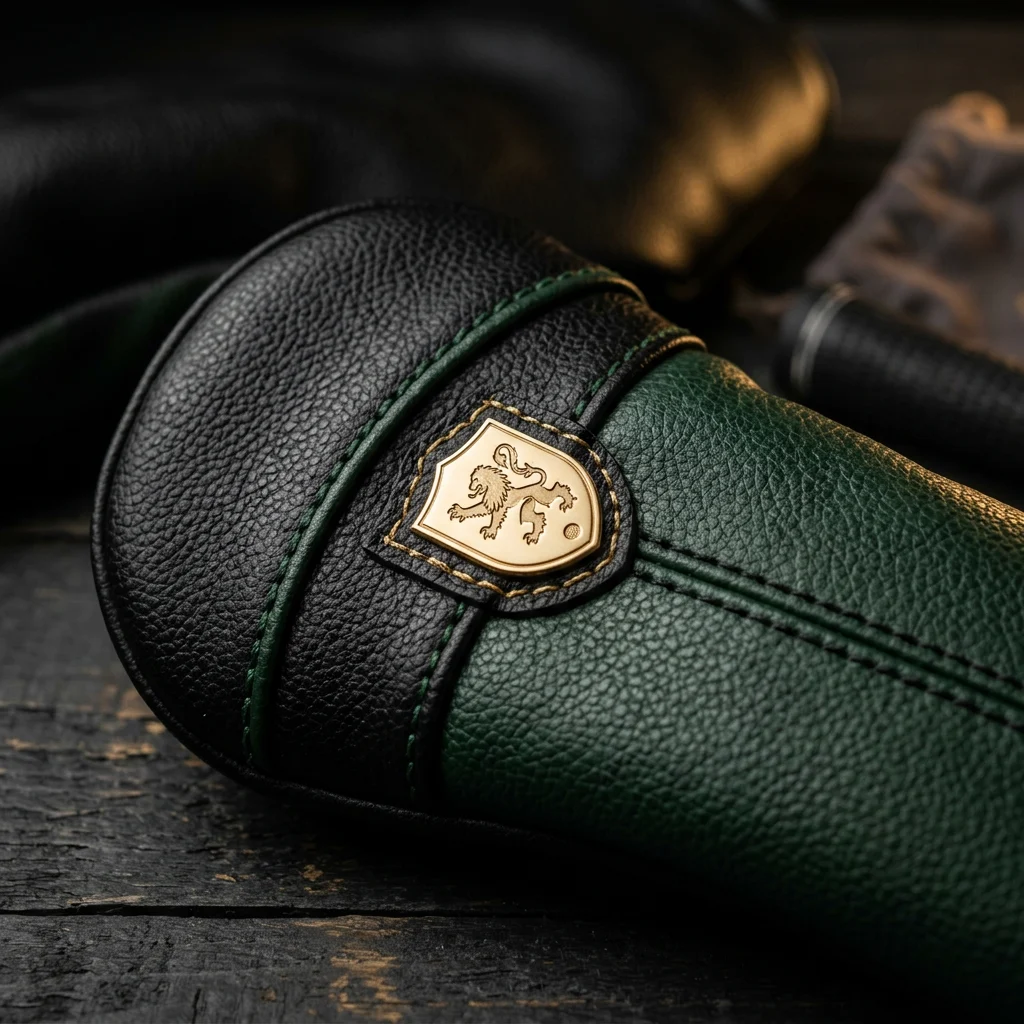
Hybrid head sizes vary between brands and models, so send us the club models your customers use most. Our quality checks for headcovers include fit on the target club, stitching strength, embroidery position and density, and color match, as listed on our quality control page.
How Do You Number Custom Hybrid Covers?
There are three practical approaches:
- Embroidered number: clean and permanent. Best when you sell covers individually by loft or as a fixed set.
- Rotating or sliding number tag: one design covers several lofts, which simplifies inventory for a brand or pro shop.
- Color coding: a different accent color per number. It looks distinctive but adds designs, and each design must meet the minimum.
For most first orders we suggest one body design with a rotating tag or two embroidered numbers, because each additional design adds sampling and minimum quantity.
Plan a Matched Headcover Set
See the driver, fairway, hybrid and putter covers we make, with materials and logo methods for each.
What Do Custom Hybrid Headcovers Cost and How Long Do They Take?
Price depends on material, decoration, quantity and packaging, so each project is quoted individually. For a planning view of the cost drivers, see our breakdown of custom golf headcovers cost. Timing is more predictable:
| Stage | Typical time |
|---|---|
| Digital mockup and quotation | 1–2 business days |
| Pre-production sample | 7–10 days |
| Mass production | 20–30 days |
| Minimum order | 50 pcs per design (knit from 100 pcs) |
Add shipping time for your route. Express courier is typically 4–8 days door to door to the US and Canada.
FAQ
Will a fairway wood headcover fit a hybrid?
It will usually go on, but it is often too loose and can fall off. A dedicated hybrid cover with a smaller opening and body fits more securely.
How many hybrid headcovers should be in a set?
Most brands offer one or two hybrid covers per set, or a single cover with a rotating number tag, because golfers carry different numbers of hybrids.
What is the minimum order for custom hybrid headcovers?
Driver, fairway and hybrid covers start at 50 pieces per design. Knit headcovers start at 100 pieces.
Can I get a sample to check the fit on my clubs?
Yes. A pre-production sample with your logo usually takes 7–10 days for headcovers, and we can test fit on the club models you specify.
Which logo method works best on a hybrid cover?
Embroidery is the most common. Patches and debossing also work, but the smaller panel means logos should be simpler and slightly smaller than on a driver cover.
How Should a Brand or Pro Shop Plan a Hybrid Cover Range?
Hybrid covers sell best as part of a story rather than as a lone item. A few planning choices make the range easier to sell and cheaper to produce:
- Start from the driver cover. Design the driver cover first, then scale the same colors, logo and trim down to the fairway and hybrid covers so the set reads as one product.
- Limit colorways on the first run. Every color is a separate design that has to meet its minimum. One or two colorways keep the first order manageable and let you learn what sells.
- Decide how you will sell them. Individually by number, as a two-piece fairway and hybrid set, or as a full three- or four-piece set with putter cover. The answer decides how many of each cover you order.
- Think about display. Covers with a hangtag or header card are easier to merchandise on a pro shop wall than loose covers in a polybag.
- Plan reorders. Keep the approved sample and specification on file so the second run matches the first in color and fit.
If you are building a full private label line around headcovers, our guide to starting a private label golf accessories brand covers the wider decisions on branding, packaging and launch quantities.
Conclusion
A hybrid headcover earns its place by fitting snugly and making the club number obvious. Choose the material that suits your brand, plan numbering early, test fit on real clubs at the sample stage and match the design to your driver and fairway covers. For more on choosing covers, read our guide to the best golf headcovers.


